Rent comparables sheet
- Estimated monthly rent for the target at the average rate
- 1,198
- Computed on this page from the inputs below
- Comparable one, rent per square foot a month
- 1.60
- Computed on this page from the inputs below
- Comparable two, rent per square foot a month
- 1.54
- Computed on this page from the inputs below
- Comparable three, rent per square foot a month
- 1.59
- Computed on this page from the inputs below
Every figure here comes from the figures you enter and the method stated beside it: your comparables' rents and floor areas, your target's size and asking price. Where a guide names a published figure it names the source and the date it was read. This site publishes no valuation, no mortgage advice and no opinion on what to bid: what a property is worth is your surveyor's answer, what you can borrow is your broker's, and the public data cited on each guide is the starting point, not the ruling.
Email me this result
We will send you these figures and a link back to them. One email, nothing else unless you tick the box.
The figures above start from a worked example (1,198). Change any input and the answer updates as you type, the way it will when the agent says the rent is higher than that.
Download the Rent comparables sheet worked example (CSV)
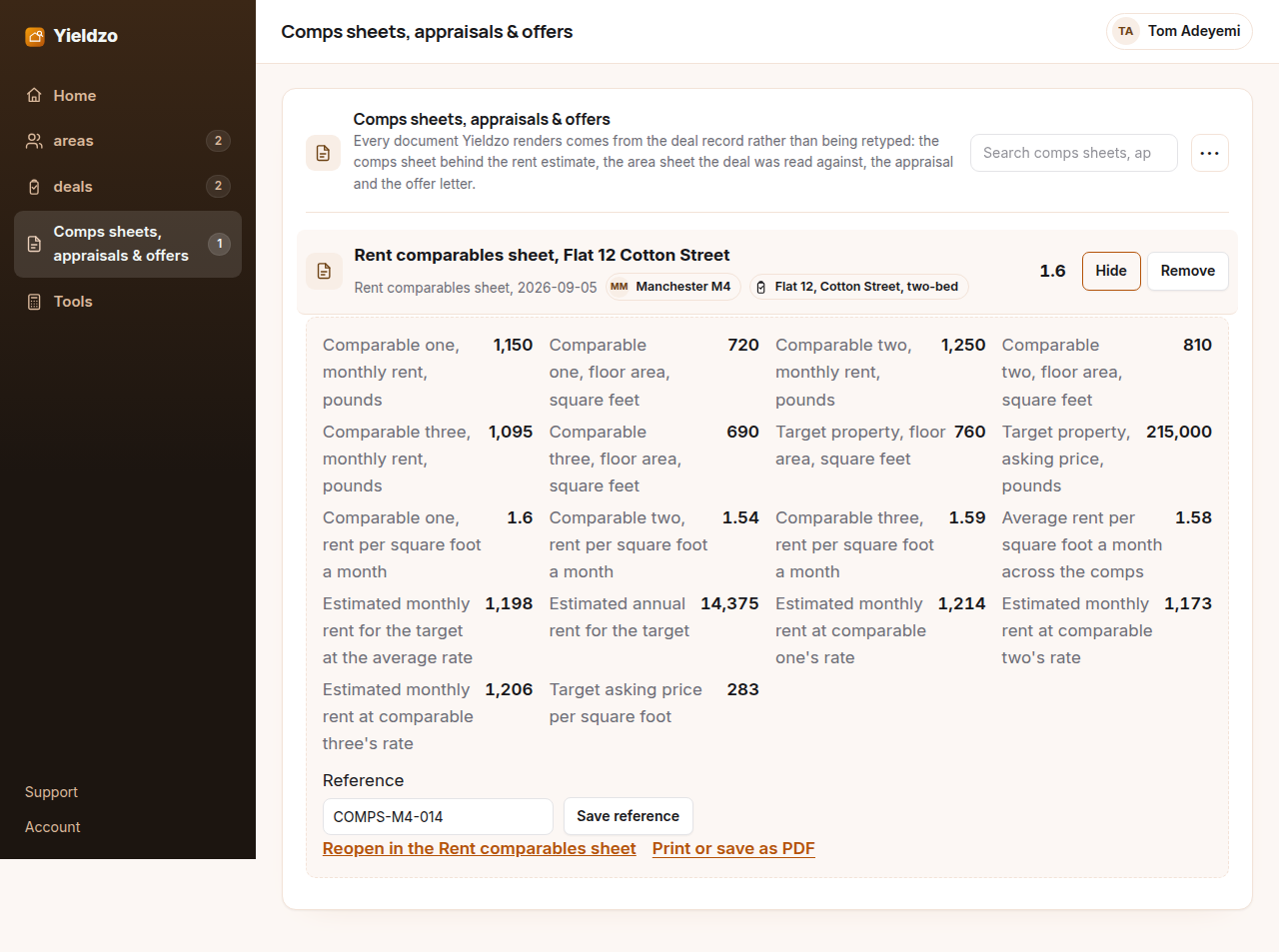
The rent comparables sheet works a target property's rent estimate from the lets in its street rather than from an agent's figure or a postcode average: the monthly rent and the floor area of three comparable lets, the floor area of the target, and its asking price. It returns each comparable's rent per square foot a month, the average across the three, the estimated monthly and annual rent for the target at the average rate and at each comparable's own rate, which is the range, and the asking price per square foot. It is the sheet an investor builds in a spreadsheet for every deal, with the arithmetic written down so the offer can be argued from the comps instead of the feeling.
Why the sheet works per square foot, not per property
Three lets in a street are three different sizes, and the rent of a bigger flat says nothing about the rent of a smaller one until both are divided by their floor area. Rent per square foot a month is the figure that makes comparables comparable: it puts a two-bed at one size and a two-bed at another on the same scale, and it turns the target's own floor area into a rent estimate by one multiplication. The floor area comes from the EPC or the floorplan, and it has to be the same measure for every comp, which is the one mistake the sheet cannot catch for you.
The range across the comps is the honesty of the estimate
Three comps that agree to within a few pounds per square foot make an estimate an investor can bid on; three whose rates differ by a third are three different markets, a furnished let against an unfurnished one, a refurbished flat against a tired one, and the average is a fiction. The sheet returns the target's rent at each comparable's own rate beside the average, so the range is on the page. A wide range is an instruction to find better comps, not a reason to pick the number you like.
The asking price per square foot is the other half of the same reading
Dividing the asking price by the target's floor area gives the figure the street's sales can be compared with, and it is what shows whether the vendor is pricing the property or the postcode. Read against the rent estimate per square foot it is the beginning of the deal appraisal, which the guides on this site set out and which Yieldzo Pro keeps against the property with the comps and the offer. The sheet stops at the two figures; what to bid is the investor's own decision.
What a buy-to-let investor asks before running the Rent comparables sheet
Which figures do I need before using the rent comparables sheet?
The monthly rent and the floor area of three lets as like the target as you can find (same street or postcode, same type, same condition), and the floor area and asking price of the target. Floor areas come from the EPC register or the floorplan; rents from the portal listing or the agent.
What if I can only find two comparables?
Put the same comp in twice and read the range as unknown rather than narrow. Two comps make an estimate; three make a range; one makes a guess. The sheet is honest about the range only when the comps are different lets.
Does the sheet work out the yield?
No, deliberately: the yield on a property, gross or net, is the landlord's arithmetic once the rent and the price are known, and rentrolldesk.com works it. This sheet works the rent estimate and the price per square foot the yield would be made from, which is the research before the offer.
Where the method in this worksheet comes from
GOV.UK, Find an energy certificate: the EPC register, where a let's floor area is recorded so every comp is measured the same way. Why the sheet asks for floor area rather than bedrooms: the EPC records the total floor area of every rated dwelling, so comps can be put on one scale from a public record rather than an agent's description.
ONS, Private rent and house prices, UK: the Price Index of Private Rents, the area series a street's comps are sanity-checked against. Why the sheet shows the estimate at each comparable's rate: an estimate far from the area's published rent series with a wide range across the comps is an estimate built on the wrong lets.